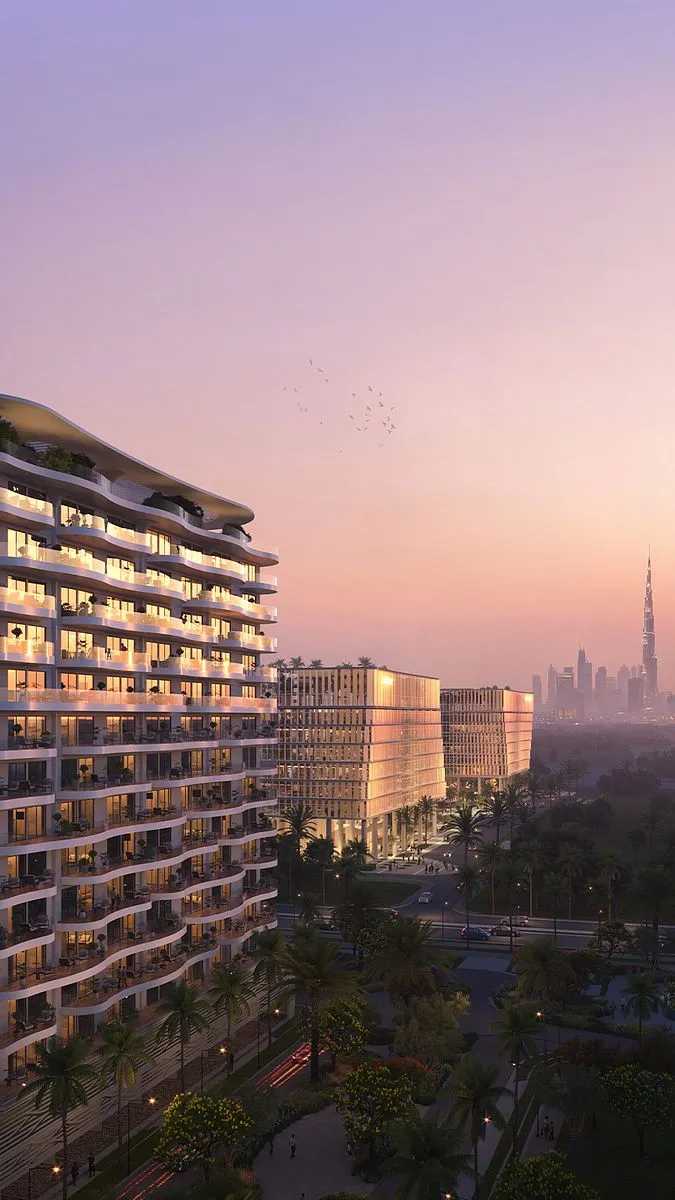

DAMAC Lagoons District, Valencia
DAMAC Lagoons
- Studio to 2-bedroom apartments
- Apartments
- Handover Q3 2029
DAMAC Properties
View project
Dubai property guide
60 projects documented
DAMAC Lagoons
DAMAC Islands, Dubailand
Dubai Canal
Al Wasl, Sheikh Zayed Road
Dubai Harbour
Dubai Maritime City
Al Sufouh
Al Safa, Dubai Canal
DAMAC Hills
DAMAC Hills
DAMAC Hills
DAMAC Hills
DAMAC Hills
When you buy off-plan, the building does not exist yet, or it is only part finished. You choose a unit from the floor plans, agree a payment plan with the developer, and sign a sales and purchase agreement. The developer then builds the project to the agreed specification, and you take the keys at handover.
Off-plan is the main way new homes are sold in Dubai. Developers launch projects in phases, and early buyers often get the first choice of units and the first release of payment plans. The trade-off is time: you wait months or years for the home, and you cannot live in it or rent it out until it is handed over.
Most off-plan homes in Dubai are apartments, townhouses or villas in master communities. DAMAC, Emaar, Sobha and other large developers sell off-plan across Dubailand, Dubai Marina, Business Bay and the newer districts. The rules that protect buyers are the same for every developer.
The process usually follows the same steps. You reserve a unit with a booking form and a reservation payment, then you sign the sales and purchase agreement, known as the SPA. The SPA records the unit, the total amount, the payment schedule, the handover date and the specification. Read it in full before you sign, because it is the document that governs the deal.
Your payments go into an escrow account, not to the developer directly. Under Dubai law, the developer must hold buyer payments in a project escrow account supervised by the Real Estate Regulatory Agency (RERA), and the money can only be released for construction of that project. Ask for the escrow account details and the project registration number before you pay anything.
The sale is also registered with the Dubai Land Department through Oqood, the interim registration system for off-plan property. Oqood registration records you as the buyer of that unit and stops the developer selling the same unit twice. Keep your Oqood certificate with your SPA.
Off-plan payment plans spread the cost over construction. A common structure is a booking payment, then instalments linked to construction milestones, then a final payment on handover. Plans such as 60/40 and 70/30 describe how much is paid during construction and how much is due at handover. Some plans continue after handover, with part of the amount paid over one to three years after you get the keys.
Construction-linked plans tie each instalment to a stage of the building, such as foundation, structure or finishing. Time-linked plans ask for payment on fixed dates instead. Construction-linked plans are easier to follow, because you can see the progress that each payment is tied to. Ask which type your plan is, and what happens if construction runs late.
The Dubai Land Department transfer fee, usually 4 per cent of the property value, is normally paid when the property is registered in your name. Some developers offer to cover this fee as an incentive. Check whether the offer is in the SPA or only in marketing material, and check what it does not cover, such as registration and agency fees.
The main benefit is choice and flexibility. You pick the unit, the floor and the view before anyone else, and you pay over time instead of in one lump sum. New buildings also come with new fittings, modern layouts and a fresh service charge history, and many buyers like the fact that no one has lived in the home before them.
Off-plan also suits buyers who want to plan ahead. If you are moving to Dubai in a year or two, or you want to time a purchase with a sale elsewhere, a handover date in the future can fit better than a ready home that needs an immediate decision. Investors use the same logic: they secure a unit now and plan the handover around their own timetable.
The main risk is delay. A project can hand over later than the date in the SPA, and the finished home can differ from the brochure in small ways. Dubai law gives buyers rights when a project is delayed or cancelled, including the right to ask RERA to intervene, but a delayed handover can still disrupt your plans. Check the developer track record: how many projects they have delivered, and whether past projects handed over on time.
A second risk is change. The developer may change the layout, the finishes or the amenities during construction, within the limits of the SPA and RERA rules. The SPA should say what the developer can and cannot change without your agreement. If a change matters to you, raise it in writing before you sign.
A third risk is the market. Values can move between launch and handover, and a home bought off-plan is harder to sell before handover than a ready home. Some developers allow resale during construction, others charge a fee, and some do not allow it at all until a set share of the amount is paid. Ask about the resale rule before you buy.
Check four things. First, the developer: their delivered projects, their handover record and their standing with RERA. Second, the project: its RERA registration, its escrow account and its construction status. Third, the SPA: the payment schedule, the handover date, the delay clause, the specification and the resale rule. Fourth, your own plan: whether you can meet every instalment on time, including the final payment at handover.
Get independent advice on the SPA if the amount is large or the terms are unclear. A property lawyer or a licensed conveyancer in Dubai can check the contract in an hour or two, and the cost is small next to the amount of the purchase. Do not rely on the sales brochure alone: the SPA and the Oqood registration are the documents that count.
Ready property is finished, you can inspect it, and you can move in or rent it out straight after transfer. Off-plan property is cheaper to enter, offers more choice, and spreads payments over time, but you wait for handover and you buy from plans. Neither is better in general. Off-plan suits buyers with time and a clear plan. Ready property suits buyers who need a home now, or who want to see exactly what they are buying.
Off-plan means buying a property before it is built or while it is under construction, from the developer, based on plans and a payment schedule. You take the keys at handover.
It is regulated: developers must register projects with RERA, hold buyer payments in escrow accounts, and register sales through Oqood with the Dubai Land Department. Check the registration and the escrow details before you pay.
Oqood is the Dubai Land Department system for registering off-plan sales. It records you as the buyer of a specific unit and prevents the same unit being sold twice.
A project bank account supervised by RERA that holds buyer payments. The developer can only use the money for construction of that project.
Often yes, but the rules depend on the developer and the SPA. Some developers allow resale after a set share is paid, some charge a fee, and some do not allow it. Ask before you buy.
The SPA should set out the delay clause. If the delay is long, buyers can raise the matter with RERA. Keep every payment receipt, the SPA and the Oqood certificate.
Yes, the transfer fee is normally paid when the property is registered in your name. Some developers offer to cover it as an incentive; check whether that promise is written into the SPA.