Service Charges in Dubai Explained: What You Pay and Why
Service charges are the yearly fees owners pay for the upkeep of shared areas of a building or community, such as security, cleaning, lifts, pools and insurance. In Dubai they are charged per square foot, budgeted by the owners association and approved by RERA, and they can vary a lot between buildings, so check them before you buy.
- Dubai Law No. 6 of 2019
- Governing law
- RERA
- Approved by
- Mollak
- Collected through
- ~AED 10–18/sq ft/yr
- Mid-market apartments
- ~AED 2–6/sq ft/yr
- Villas (master community)
- The owner
- Who pays

The quick answer
Service charges are the yearly fees every owner in a Dubai building or community pays to run and maintain the shared parts: lobbies, lifts, pools, gyms, security, cleaning, common-area utilities, insurance and a reserve fund for future repairs. They are charged per square foot of your unit, approved by the Real Estate Regulatory Agency (RERA) and collected through the Dubai Land Department's Mollak system. Owners pay them, not tenants. In mid-market apartment buildings they commonly run at about AED 12–20 per square foot a year, more in luxury towers and much less per square foot in villa communities. They are one of the biggest differences between a property's gross and net rental yield, so check them before you buy.
What service charges pay for
Each building or community has a yearly budget, split into a general fund for running costs and a reserve (sinking) fund for major future works. A typical budget covers:
| Budget heading | What it covers |
|---|---|
| Management | The licensed association management company that runs the building |
| Security and concierge | Guards, CCTV, access control, reception staff |
| Cleaning and waste | Common areas, façade and window cleaning, rubbish collection |
| Maintenance contracts | Lifts, air-conditioning plant, fire systems, pools, gyms, landscaping |
| Common-area utilities | Electricity, water and cooling for lobbies, corridors, car parks and amenities |
| Insurance | Building structure and public liability (not your contents) |
| Reserve fund | Saved for big items such as lift replacement, façade repairs and repainting |
Your own apartment's electricity, water and, in many buildings, district cooling are billed separately and are not part of service charges.
Who sets them and the law behind them
Service charges are governed by Dubai Law No. 6 of 2019 on the ownership of jointly owned real property. In short:
- Every jointly owned building or community has an owners association, run day to day by a RERA-licensed management company.
- The yearly budget must be approved by RERA before owners can be billed, and the approved rate for each building is published in the DLD's Service Charge Index.
- Charges are collected through Mollak, the DLD's system for jointly owned property, which gives owners invoices and a statement of account.
- Owners can see the budget and audited accounts, and an owners committee can be formed to oversee the management company.
This system was created to stop arbitrary charges. If an invoice is much higher than the published index rate for your building, ask the management company to explain it.
Typical rates in Dubai
Rates depend on the building's age, height, facilities and how well it is run. The ranges below are indicative only. Always check the current figure for the exact building in the DLD Service Charge Index.
| Property type | Indicative yearly rate per sq ft | Why |
|---|---|---|
| Mid-market apartment building (e.g. JVC, Dubai Sports City) | About AED 10–18 | Basic facilities, shared pool and gym |
| Prime apartment tower (e.g. Dubai Marina, Downtown Dubai) | About AED 15–30 | High-rise lifts, concierge, larger amenities |
| Branded or hotel-serviced residences | Often AED 30+ | Hotel-level staffing and services |
| Townhouses and villas in master communities | Often AED 2–6 | Fewer shared facilities per square foot; owners maintain their own homes |
Villa and townhouse owners usually pay a master community charge for roads, parks, landscaping and security across the whole community. Apartment owners may pay both a building charge and a share of the master community charge.
Worked example: how service charges change your yield
Take a 900 sq ft one-bedroom apartment bought for AED 1,200,000 and rented for AED 85,000 a year, in a building charging AED 16 per sq ft.
| Item | AED a year |
|---|---|
| Rent | 85,000 |
| Gross yield | 7.1% |
| Service charge (900 × 16) | −14,400 |
| Repairs and vacancy allowance (5% of rent, illustrative) | −4,250 |
| Net income | 66,350 |
| Net yield | about 5.5% |
The same flat in a building charging AED 25 per sq ft would cost AED 22,500 a year in service charges, cutting the net yield to under 5%. That is why two similar-looking flats at the same price can be very different investments. Our guide to renting out your property covers the other costs landlords face.
Off-plan homes: estimated versus actual charges
When you buy off-plan, the developer usually quotes an estimated service charge in the brochure or sale agreement. Treat it as a guide, not a promise. The real rate is set only when the building is finished, the owners association is registered and RERA approves the first budget. In the first year or two, charges can move noticeably as actual contract and utility costs replace estimates. Ask the developer what assumptions the estimate is based on, compare it with completed buildings of a similar size and specification nearby, and leave a margin in your yield calculation. Our guide to escrow and Oqood explains the other protections that apply before handover.
Questions to ask the management company
- What is the RERA-approved rate for this year, and how did it change from last year?
- How much is in the reserve fund, and what major works are planned in the next five years?
- When were the main maintenance contracts last tendered?
- Is there an owners committee, and when is the next general assembly?
- Are there any special levies or legal disputes affecting the building?
Clear answers to these questions are a good sign the building is well run, which also protects its resale value.
When and how you pay
- Most buildings invoice quarterly or half-yearly in advance through Mollak. Some allow card or bank transfer payment through the management company's portal.
- Charges are based on the unit's area on the title deed (or the Oqood for off-plan homes), including balconies.
- Off-plan buyers start paying from handover. Some developers waive the first year as a sales incentive; check the sale agreement.
- Owners who rent out their property still pay. Leases in Dubai normally leave service charges with the landlord.
What happens if you do not pay
Unpaid service charges stay attached to the unit. In practice:
- The developer will not issue the no-objection certificate (NOC) needed to sell, so you cannot transfer the property until arrears are cleared.
- The owners association can add late fees allowed under its rules and take legal action to recover the debt.
- Buyers should always ask for a current service charge statement before signing Form F. Arrears are normally settled by the seller before transfer.
How to check charges before you buy
- Look up the building's approved rate in the DLD Service Charge Index (on the DLD website or the Dubai REST app).
- Ask the seller or agent for the latest Mollak invoice and statement of account for the unit.
- Multiply the rate by the unit's area to get the yearly cost, and include it in your yield calculation.
- Ask whether major works are planned and how healthy the reserve fund is. A low reserve can mean special levies later.
- For villas, ask for the master community charge as well as any sub-community fee.
How to keep service charges down
- Choose buildings with facilities you will use. Large amenity decks, multiple pools and concierges cost money every year.
- Join or form an owners committee. Committees can review contracts and push the management company to retender.
- Read the audited accounts. Sudden jumps often come from one contract that can be challenged.
- Compare similar buildings nearby. If yours is far above the area average, ask why at the general assembly.
Common mistakes to avoid
- Judging a property on gross yield without deducting service charges.
- Using the developer's brochure figure instead of the current RERA-approved rate.
- Forgetting the master community charge on top of the building charge.
- Buying without checking for arrears, which can delay the NOC and the transfer.
- Assuming tenants will pay. In Dubai the owner pays service charges.
Service charges are just one running cost of owning. For the full picture of buying costs, see how to buy property in Dubai, and compare ready properties with off-plan projects, where charges start only at handover.
Projects mentioned in this guide
Live project pages from our directory, with unit sizes, status and sources.




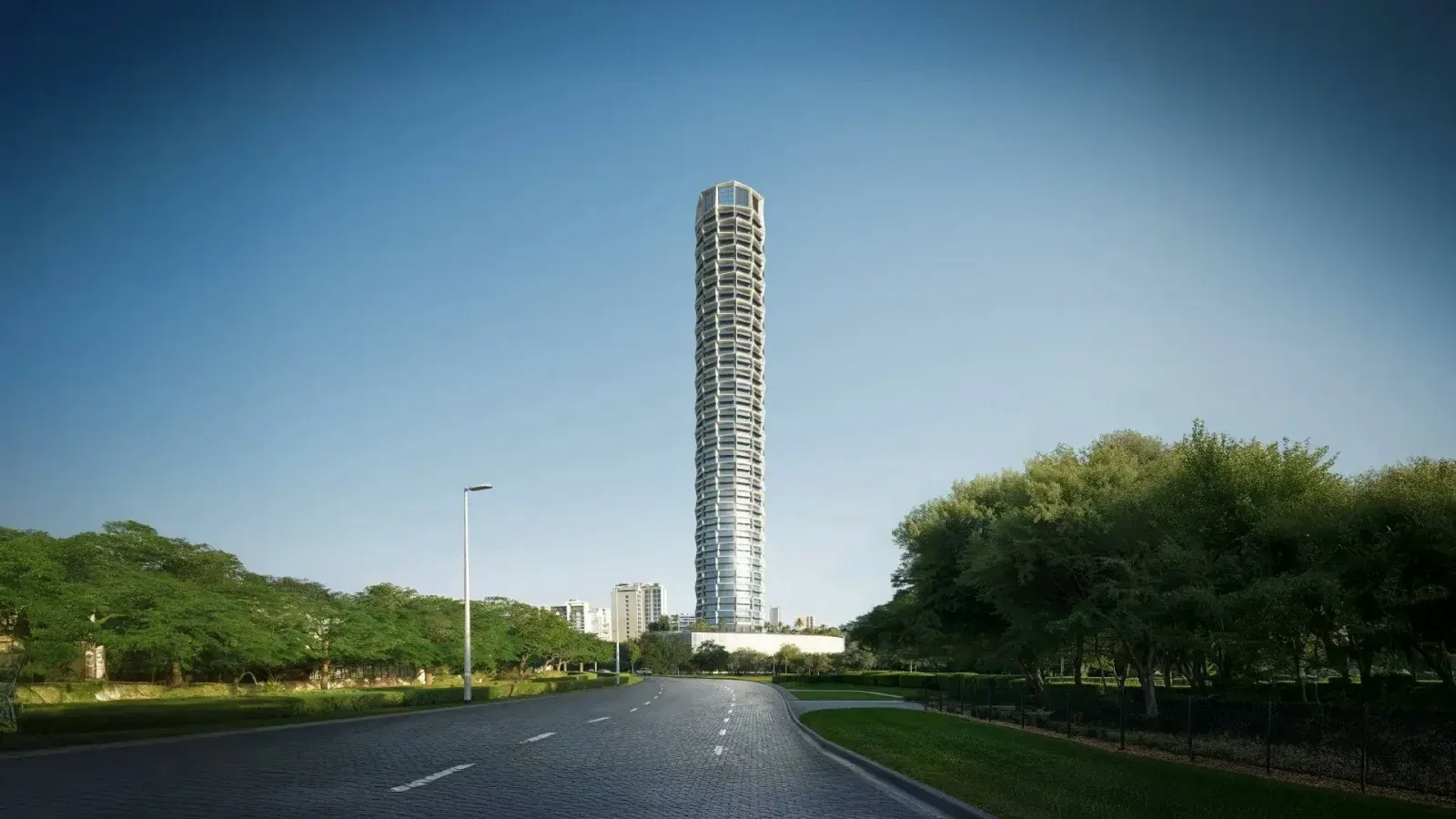

Binghatti Circle
Jumeirah Village Circle (JVC)
- Studio to 3-bedroom apartments
- Apartments
- Completion Q2 2027
Frequently asked questions
Who pays service charges in Dubai, the landlord or the tenant?
The owner. Standard Dubai tenancy contracts leave service charges with the landlord, so investors should deduct them when working out rental yield.
How are service charges calculated?
The RERA-approved yearly rate for the building, in AED per square foot, is multiplied by the unit's area on the title deed, including balconies.
What is the RERA Service Charge Index?
It is the Dubai Land Department's published list of approved service charge rates for each jointly owned building and community. You can check it on the DLD website or the Dubai REST app.
What is Mollak?
Mollak is the DLD system used to manage jointly owned properties. It issues service charge invoices, records payments and gives owners a statement of account.
Can I sell my property if I owe service charges?
Not until they are paid. The developer will not issue the no-objection certificate needed for transfer while there are arrears.
Do villa owners pay service charges?
Yes. Villa and townhouse owners pay a master community charge for roads, landscaping, security and shared facilities. It is usually far lower per square foot than apartment building charges.
When do off-plan buyers start paying service charges?
From handover, when the unit is ready. Some developers cover the first year as an incentive, so check your sale agreement.
Why did my service charges go up?
Common reasons are new maintenance contracts, higher utility costs or a top-up to the reserve fund. Owners can ask for the approved budget and audited accounts, and raise questions at the general assembly.
About this article

Property Research Analyst
Adnan Sawant is a Property Research Analyst at DXB Propedia, writing about the costs of owning property in Dubai: mortgages, service charges, fees and the…

Senior Editor
Khadeeja Kazi is a Senior Editor at DXB Propedia, responsible for the buyer guides and area coverage. Every guide Khadeeja signs off is checked against…
Last reviewed . Fees and rules can change; confirm current figures with the authority named in each section. Read our editorial policy or meet the team.